
Calluses are a common and often overlooked problem. However, they can affect our daily comfort. These accumulations of hard, thick skin, also called calluses, are primarily the result of repeated pressure or friction. Although they are a natural protective mechanism of our skin, calluses can quickly become bothersome or even painful.
Calluses: What Are They?
Calluses, also known as calluses, are an accumulation of layers of dead, hard, and thick skin that forms in response to excessive pressure or friction. The skin on our feet, subjected to numerous mechanical stresses, reacts by producing calluses to protect itself. This phenomenon is a natural response of the body, designed to strengthen the affected area and prevent injuries.
Calluses mainly develop on the areas of the sole of the foot where pressure is most intense, such as the heels, foot pads, and edges of the toes. Although generally harmless, calluses can become uncomfortable or even painful if not properly treated.
Why do I have calluses on my feet? What are the causes?
The causes of calluses on the feet are varied. Here is a list of the main ones:
Repeated pressure and friction: Wearing ill-fitting shoes or high heels (stilettos) puts increased pressure on certain parts of the foot, leading to calluses
Strenuous physical activity: Running, prolonged walking, or other athletic activities can increase areas of friction and pressure
Posture and gait: Poor posture or an irregular gait can distribute body weight unevenly on the feet, creating pressure points.
Foot deformities: Bunions (hallux valgus), hammertoes, and other structural foot abnormalities (flat feet) can cause excessive friction.
Inadequate hygiene: Poor foot hygiene can contribute to skin thickening.
Genetic factors: Some people are more predisposed to developing calluses due to their skin type (dry skin) or body shape.
Barefoot: Walking barefoot on rough surfaces can also promote calluses.
What are the symptoms of plantar calluses?
The signs indicating the presence of calluses on the bottom of the feet are generally easy to identify. Here are the main symptoms:
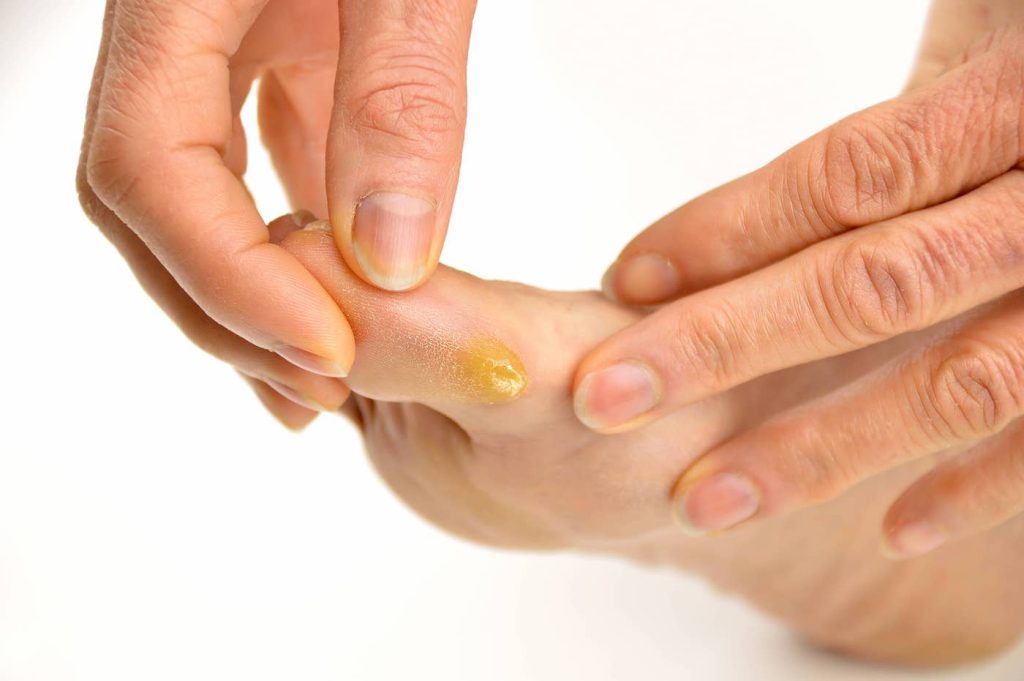
- Skin thickening: The appearance of thick, hard, and rough areas.
- Rough texture: The surface of the callus often feels rough to the touch.
- Discoloration: The skin may become yellowish or grayish.
- Discomfort: A feeling of pressure or discomfort, especially when walking.
- Pain: In more severe cases, the callus can cause pain, especially if it cracks.
- Fissures: Cracks can appear, especially on the heels, which can become painful and susceptible to infection.
- Local hardness: The affected area is significantly harder than the surrounding skin.

What are the risks of having calluses on the feet?
Although often considered a mere cosmetic nuisance, plantar calluses can lead to several complications if not treated properly. The main associated risks are:
- Increased pain: The callus can become extremely painful, especially if it cracks.
- Infection: Cracks in the callus can serve as entry points for bacterial and fungal infections.
- Ulceration: In people with diabetes or circulatory disorders, calluses can develop into ulcers.
- Gait alteration: Pain and discomfort can alter gait, leading to musculoskeletal problems.
- Blistering: Blisters can form under the callus, adding to the discomfort.
- Difficulty putting on shoes: Thick areas of calluses can make wearing certain shoes uncomfortable.
What care should be taken to limit the formation of calluses?
To prevent the formation of calluses on the soles of your feet, it’s important to adopt a proper care routine. Here are some practical tips:
1. Moisturize regularly: Use specific foot moisturizers rich in urea or salicylic acid.
2. Wear suitable shoes: Choose comfortable, well-fitting shoes to avoid pressure points.
3. Use orthopedic insoles: They help distribute pressure evenly across the sole of the foot.
4. Maintain good foot hygiene: Wash your feet daily and dry them thoroughly, especially between the toes.
5. Take regular foot bath with pedicure spa kits: To soften the skin and facilitate the removal of calluses.
6. Use protective equipment: Special pads or bandages can protect areas prone to friction.
7. Avoid walking barefoot: On rough surfaces, which can promote the formation of calluses.
Precautions for Use
When using solutions to treat plantar calluses, it is essential to take certain precautions:
- Use sparingly: Do not rub the callus too vigorously with a foot file to avoid damaging healthy skin.
- Hygiene: Maintain good hygiene with the tools used.
- Avoid irritating products: Do not use products that are too harsh or not recommended for the skin.
- Medical consultation: If you have diabetes, circulatory problems, or infections, consult a healthcare professional before attempting any home treatment.
Read also: The Right Bit for the Job: Your Guide to Nail Drill Bits & Grits